More Than a Stronger Glasses Prescription
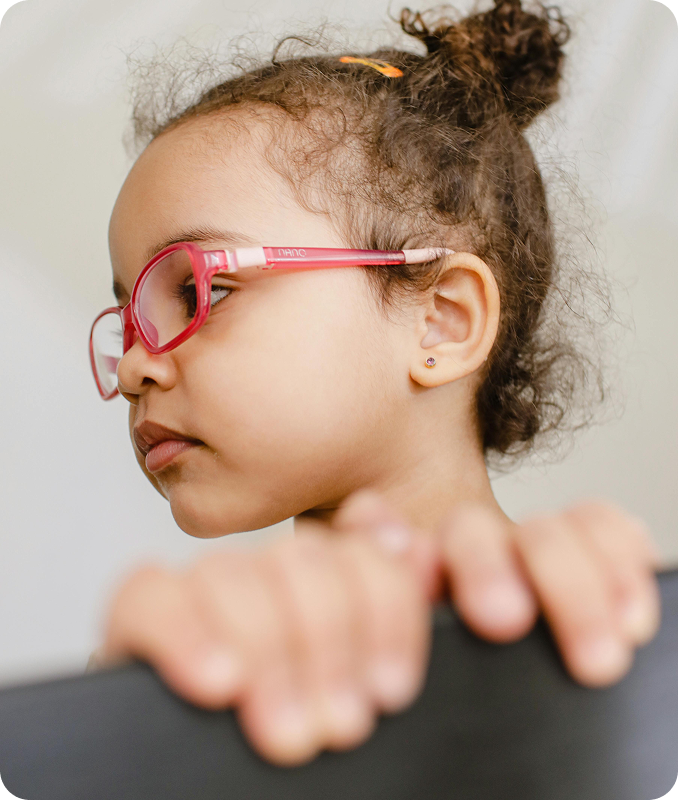
If your child's glasses prescription seems to get stronger every year, you may think it's simply part of growing up. However, progressive myopia is more than just a need for stronger glasses.
As nearsightedness increases, so can the risk of certain eye conditions later in life, including retinal detachment, glaucoma, and myopic macular degeneration.
At Weston Contact Lens Institute, Dr. Elise Kramer offers personalized myopia management treatments designed to slow the progression of nearsightedness in children and teenagers.
Our goal is not just to help your child see clearly today, but to help protect their long-term eye health.
What Is Myopia and Why Does It Matter?
Myopia occurs when the eye grows too long from front to back or when its optical power is too strong for its length. This causes light to focus in front of the retina instead of directly on it, making distant objects appear blurry.
Myopia often develops during childhood and can continue to progress throughout the teenage years as the eyes grow.
~50%
Research suggests that nearly half of the world's population may be nearsighted by 2050.
Although glasses and traditional contact lenses correct blurry vision, they do not necessarily slow the underlying progression of myopia.
Myopia management is different. It uses specially designed treatments to help slow changes in prescription and eye growth over time.
Why Is It Important to Slow Myopia Progression?
The stronger a person's nearsighted prescription becomes, the greater their lifetime risk of certain eye conditions.
- Myopic macular degeneration
Damage to the central retina that can affect detailed vision. - Retinal detachment
A serious condition in which the retina separates from the back of the eye. - GlaucomaA group of conditions that can damage the optic nerve.
- CataractsClouding of the eye's natural lens.
Even lower levels of myopia are associated with increased risks compared with eyes without myopia.
Eye Disease Risk by Degree of Myopia
Myopia Level
Myopic Macular Degeneration
Retinal Detachment
Open-Angle Glaucoma
Low
13.6×
3.2×
1.6×
Moderate
72.7×
8.7×
2.9×
High
845.1×
12.6×
2.9×
These figures represent relative risks compared with people without myopia, not the probability that an individual will develop these conditions. Risk estimates vary by study and population.
The purpose of myopia management is to reduce how much nearsightedness progresses during childhood, potentially lowering the likelihood of reaching higher-risk levels of myopia.
What Causes Myopia to Progress?
Several factors can influence whether a child develops myopia and how quickly it progresses.

Family History
Children with one or both nearsighted parents have a greater likelihood of developing myopia.
However, children without a family history can also become nearsighted.

Age
Myopia often progresses most rapidly during childhood, particularly when it begins at a younger age.
The earlier myopia develops, the more years there may be for the prescription to increase.
This is why early detection and regular eye examinations are so important.

Limited Time Outdoors
Research has shown that children who spend more time outdoors have a lower risk of developing myopia.
Encouraging approximately two hours of outdoor activity each day, when practical, may help reduce the risk of myopia onset.
However, outdoor time alone may not be enough to control progression in children who are already nearsighted.

Screen Time and Near Work
Long periods of close-up activities, including reading, homework, smartphone use, and computer work, may contribute to myopia development.
Encouraging regular breaks, maintaining a comfortable reading distance, and balancing indoor activities with outdoor time can support healthy visual habits.
Our Myopia Management Treatments
At Weston Contact Lens Institute, we offer several treatment options designed to slow myopia progression.
The most appropriate treatment depends on your child's age, prescription, eye health, lifestyle, and ability to handle contact lenses.
01
Orthokeratology (Ortho-K)
- Freedom from glasses or contact lenses during the day for many patients
- A non-surgical and reversible method of vision correction
- Evidence supporting slower myopia progression
- Convenience for sports and other daytime activities
02
MiSight 1 Day Contact Lenses
- Clear vision throughout the day
- Daily disposable convenience
- No overnight contact lens wear
- Evidence supporting reduced myopia progression
- A familiar soft contact lens experience
Proper hygiene and handling remain important, even with daily disposable lenses.
03
Low-Dose Atropine Eye Drops
04
Multifocal Soft Contact Lenses
05
Essilor Stellest Spectacle Lenses
- No contact lens insertion or removal
- Familiar eyeglass wear
- Clear distance vision
- An optical design specifically developed for myopia management
Which Myopia Management Treatment Is Right for Your Child?
Treatment
Commonly Used For
Main Benefit
Ortho-K
MiSight 1 Day
Low-Dose Atropine
Multifocal Soft Lenses
Stellest Glasses
What to Expect During a Myopia Management Consultation
A comprehensive evaluation helps us understand how their eyes are developing and whether their myopia is progressing.
Comprehensive Eye Examination
We evaluate your child's vision, prescription, eye health, and relevant family history.
When appropriate, additional testing may include measurements of the eye's length, known as axial length, which can help us monitor changes associated with myopia progression
Personalized Treatment Plan
Based on the examination findings, we discuss which treatments may be most appropriate.
We'll explain the expected benefits, limitations, safety considerations, and practical requirements of each option.
Treatment Fitting and Education
If contact lenses are selected, our team provides detailed instruction on insertion, removal, cleaning, and safe wear.
For glasses or eye-drop treatments, we'll explain how to use them correctly and what to expect.
Regular Follow-Up Visits
Myopia management is an ongoing process.Follow-up appointments allow us to monitor changes in prescription and eye growth, evaluate treatment response, and make adjustments when necessary.
Why Starting Myopia Management Early Matters
- Reduce the rate of prescription changes
- Slow excessive eye elongation
- Reduce the likelihood of developing high myopia
- Potentially lower long-term risks associated with higher levels of nearsightedness
Frequently Asked Questions About Myopia Management
Personalized Myopia Management at Weston Contact Lens Institute
Your child's vision deserves more than simply updating their glasses prescription every year.
At Weston Contact Lens Institute, Dr. Elise Kramer offers personalized myopia management using advanced contact lens designs, orthokeratology, specialty glasses, and other evidence-based treatment options.
Our goal is to help children achieve clear vision while slowing the progression of nearsightedness and supporting their long-term eye health.
We welcome patients from across the United States and around the world at our Weston and Miami locations.
If your child's prescription continues to increase or you're interested in learning more about myopia management, our team is here to help.