
Core Insights:
- Sjögren’s Syndrome can cause severe dry eye that standard eye drops often cannot control.
- Long‑term inflammation reduces tear quantity and quality, leading to friction, pain, light sensitivity, and fluctuating vision.
- Scleral lenses vault over the cornea, forming a fluid reservoir that provides constant moisture and a smooth optical surface.
- These lenses protect the eye from lid friction and environmental irritants and can support the healing of a damaged cornea.
Successful scleral lens wear for Sjögren’s requires specialized fitting, careful follow‑up, and ongoing care with an experienced doctor.
If you're living with Sjögren's Syndrome, you're likely familiar with the constant discomfort that dry eye can cause. A healthy tear film is essential for clear vision, comfort, and protecting the surface of the eye. In Sjögren's Syndrome, the immune system attacks moisture-producing glands, reducing tear production and disrupting the stability of the tear film. Because of this, many people experience persistent dryness, irritation, light sensitivity, and fluctuating vision.
Dry eye associated with Sjögren's Syndrome is often more severe than typical dry eye and may not respond adequately to artificial tears or conventional treatments alone. While prescription medications, punctal occlusion, autologous serum tears, and other advanced therapies can help many patients, some continue to experience significant discomfort and blurred or fluctuating vision. For these individuals, custom scleral lenses can provide life-changing relief by protecting the ocular surface and maintaining continuous hydration throughout the day. Many patients also notice more stable vision throughout the day because the fluid reservoir creates a smooth optical surface over the cornea.
What is Sjögren’s Syndrome?
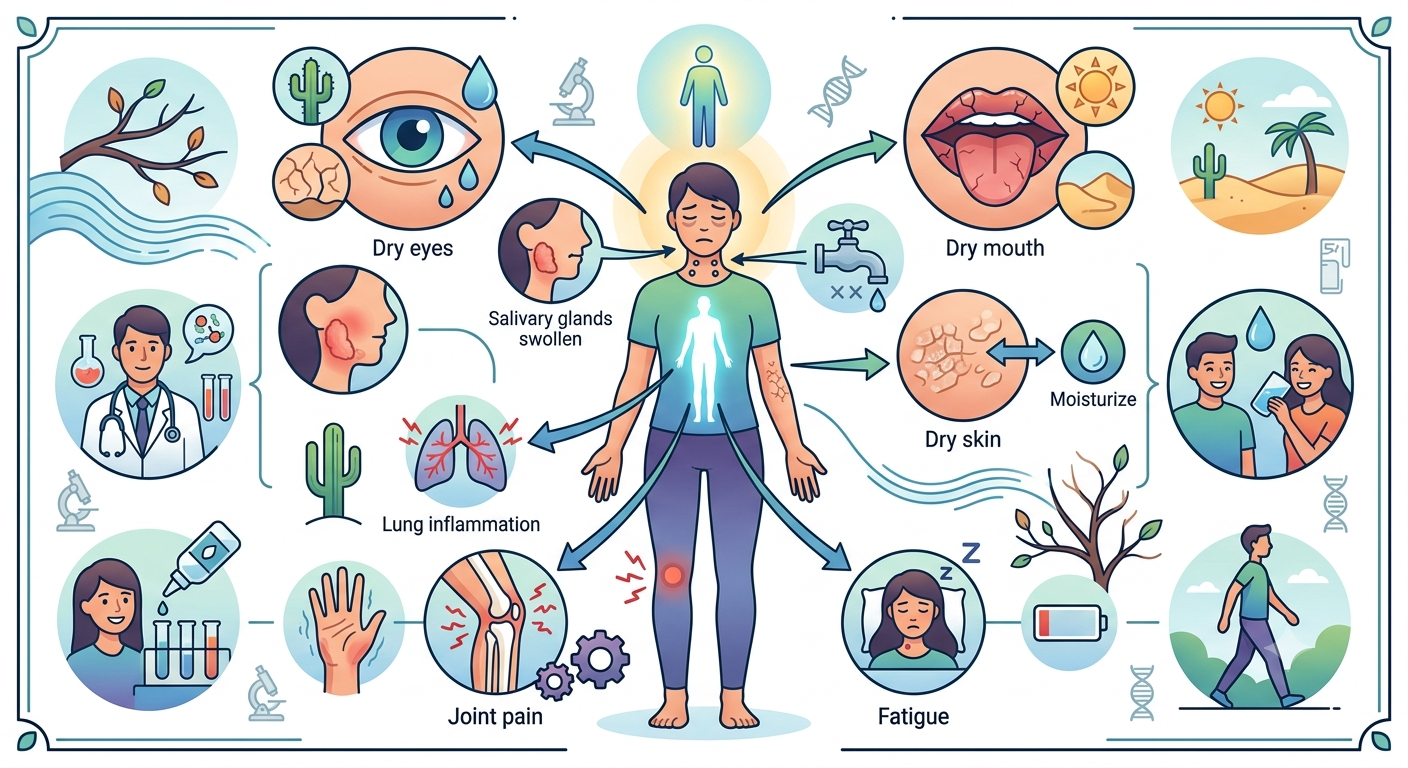
Sjögren’s Syndrome is a chronic autoimmune condition in which the body’s immune system targets its own tissues. Sjögren’s affects the moisture-producing glands in the eyes and mouth, leading to significantly reduced tear and saliva production. Sjögren’s syndrome can cause persistent dry mouth and dry eyes that affect daily life. The condition often occurs alongside other autoimmune diseases, such as lupus and rheumatoid arthritis.
How Does Sjögren’s Syndrome Affect the Eyes?
Although dry eye is the hallmark symptom of Sjögren's Syndrome, it can present in many different ways. Some symptoms are caused by reduced tear production, while others result from chronic inflammation and damage to the ocular surface. Common eye symptoms include:
- Persistent dryness
- Burning or stinging
- A gritty or sandy sensation
- Redness
- Excessive tearing (also called reflex tearing)
- Light sensitivity (photophobia)
- Blurred or fluctuating vision
- Difficulty reading, using a computer, or driving
- Contact lens intolerance
Many people are surprised to experience watery eyes despite having severe dry eye. This occurs because irritation from the dry ocular surface can trigger the eyes to produce an overflow of reflex tears. Unlike healthy tears, these reflex tears do not provide lasting lubrication, so the eyes may continue to feel dry and uncomfortable despite excessive watering.
Without a stable tear film, the surface of the eye becomes vulnerable to friction between the eyelid and the cornea (the clear front surface of the eye). Over time, this can lead to microscopic damage, scarring, or even corneal ulcers. Chronic inflammation can also make everyday activities like reading, driving, or using a computer significantly more uncomfortable. These changes to the ocular surface can lead to several common signs and symptoms, including:
- Reduced tear production: Sjögren's Syndrome causes chronic inflammation that damages the lacrimal glands, reducing tear production. Without enough tears to protect and nourish the eye, the ocular surface becomes increasingly dry, irritated, and inflamed.
- Tear film instability: Reduced tear production disrupts the stability of the tear film, allowing tears to evaporate more quickly and leaving areas of the cornea exposed.
- Ocular surface inflammation and corneal damage: Without a stable tear film, friction between the eyelids and the cornea increases with every blink. Over time, this can lead to microscopic damage to the corneal surface, recurrent erosions, scarring, or, in severe cases, corneal ulcers.
- Blurred or fluctuating vision: Because the tear film forms the first optical surface of the eye, an uneven tear layer causes light to scatter rather than focus properly. As a result, vision may blur throughout the day and temporarily improve after blinking.
- Light sensitivity (photophobia): Chronic dryness and inflammation can make the eyes unusually sensitive to light. Bright sunlight, indoor lighting, or prolonged screen use may increase discomfort, squinting, headaches, and eye fatigue.
- Increased risk of eye infections: Chronic dryness and inflammation can make the eyes more susceptible to conditions such as conjunctivitis and other ocular surface infections because the tear film no longer provides its normal protective barrier against bacteria and other irritants.
How Do Scleral Lenses Help With Sjögren’s Syndrome Dry Eye?
When conventional dry eye therapies do not provide enough relief, specialty contact lenses offer another treatment option. Scleral lenses are larger than traditional soft contact lenses and are designed so that they rest on the sclera (the white part of the eye) rather than the cornea. Because they do not touch the damaged corneal surface, scleral lenses help reduce friction and provide exceptional comfort for many patients with severe dry eye.
Scleral lenses are designed with a vaulted shape that creates a space between the back of the lens and the cornea. Before insertion, this space is filled with preservative-free sterile saline, creating a continuous reservoir of fluid that bathes the ocular surface throughout the day. This unique design offers several important benefits for people with Sjögren's Syndrome, including:
- Continuous hydration of the ocular surface throughout the day
- Protection against friction caused by blinking
- Reduced tear evaporation
- A smoother optical surface for clearer, more stable vision
- Greater comfort than traditional soft contact lenses for many patients with severe dry eye
- Protection from environmental irritants such as dust, wind, and pollen
- A protective healing environment that supports recovery of a damaged ocular surface
- A custom-designed fit based on the unique shape of each patient's eye
While scleral lenses do not treat the underlying autoimmune disease, they can significantly reduce symptoms, protect the ocular surface from ongoing damage, and significantly improve comfort and quality of life for many patients with Sjögren's Syndrome.
Why Don’t Eye Drops Make My Dry Eye Better?
Artificial tears can provide temporary lubrication, but they remain on the surface of the eye for only a short time before draining away or evaporating. For people with moderate to severe Sjögren's Syndrome, dry eye is caused by chronic inflammation and significantly reduced tear production. As a result, artificial tears alone are often not enough to provide lasting relief.
Depending on the severity of your condition, treatment may also include prescription anti-inflammatory medications, punctal occlusion, autologous serum tears, biologic eye drops, Lacrifill, treatments that reduce tear evaporation, or custom scleral lenses. The most effective treatment plan is individualized based on the health of your ocular surface and the underlying cause of your dry eye.
A healthy tear film is made up of three layers that work together to keep the eyes comfortable and maintain clear vision:
- Oil layer: Slows tear evaporation and helps keep moisture on the eye.
- Water layer: Provides hydration and delivers nutrients to the ocular surface.
- Mucin layer: Helps tears spread evenly across the surface of the eye.
In Sjögren's Syndrome, multiple components of the tear film may become disrupted, making lubrication alone insufficient to restore a healthy ocular surface.
What is the importance of an Eye Care Specialist for Sjögren’s Syndrome?
Long-term success with scleral lenses requires ongoing care from an eye care provider experienced in managing complex ocular surface disease. Regular follow-up visits allow us to monitor the health of your cornea, evaluate the fit of your lenses, make adjustments as your eyes change, and manage any underlying inflammation. When appropriate, we also coordinate care with your rheumatologist and other healthcare providers to ensure your ocular treatment complements your overall management of Sjögren's Syndrome.
Scleral lenses are often one component of a comprehensive dry eye treatment plan. Depending on your individual needs, your doctor may also recommend prescription anti-inflammatory medications, punctal occlusion, meibomian gland therapy, autologous serum tears, treatments that reduce tear evaporation, or other advanced therapies to optimize the long-term health of your ocular surface.
Advanced Dry Eye Care for Sjögren's Syndrome at Weston Contact Lens Institute
Every patient with Sjögren's Syndrome experiences dry eye differently. Our goal is not only to improve comfort but also to protect your vision and preserve the long-term health of your eyes. Through advanced diagnostic testing, individualized treatment plans, and precision-designed scleral lenses, we help patients regain comfort and return to the activities they enjoy.
If you're struggling with severe dry eye caused by Sjögren's Syndrome, contact Weston Contact Lens Institute today to schedule a comprehensive evaluation and learn whether scleral lenses are right for you.
Frequently Asked Questions
Can I wear scleral lenses all day?
Most patients wear their scleral lenses comfortably for the majority of the day. Your eye doctor will recommend a wearing schedule based on the severity of your dry eye and the health of your ocular surface.
Will I still need eye drops if I wear scleral lenses?
Possibly. Many patients continue using prescription medications or lubricating eye drops as part of a comprehensive treatment plan. Scleral lenses often reduce symptoms significantly, but they do not treat the underlying autoimmune disease.
Are scleral lenses difficult to insert?
There is a learning curve, but most patients become comfortable inserting and removing their lenses after proper training. Our team provides hands-on instruction and ongoing support to help you succeed.
How long do scleral lenses last?
With proper care, scleral lenses typically last one to three years, although replacement schedules vary depending on the lens material, wear, and changes in your prescription or eye health.
Can scleral lenses improve both my vision and my dry eye symptoms?
Yes. By creating a smooth optical surface over the cornea, scleral lenses often reduce blurred and fluctuating vision caused by an unstable tear film while also improving comfort.