
Both TearCare® and LipiFlow® treatments use controlled heat to clear blocked meibomian glands related to dry eye disease, but there is a core difference. LipiFlow heats and massages the glands automatically while your eyes are closed. TearCare heats the glands with the eyes open and blinking, at which time the doctor manually expresses the glands.
Although they use different techniques, TearCare and LipiFlow share the same goal: improving meibomian gland function and relieving evaporative dry eye.
This comparison is for patients with evaporative dry eye caused by meibomian gland dysfunction who have not found lasting relief from eye drops and warm compresses. We cover how each thermal treatment works, the differences in comfort during treatment, what studies show, who is a good candidate for each treatment, and how to decide which is right for you.
What Is Meibomian Gland Dysfunction and Why Heat Helps
Meibomian gland dysfunction (MGD) occurs when the oil-producing glands in the eyes become blocked or inflamed. The glands release meibum, which is the oily substance that forms a crucial component of the tear film. The oily layer spreads across the eye and prevents the watery layer from evaporating too quickly. When the meibomian glands become clogged, the tear film loses its oil layer, and your tears evaporate too quickly, causing severe dry eye symptoms like burning, grittiness, and fluctuating vision.
Several factors can contribute to MGD and evaporative dry eye, including long hours of screen time that reduce how much you blink, hormonal changes, eye makeup that clogs gland openings, rosacea, and blepharitis. Eye drops and warm compresses can provide temporary relief for many patients, but they often aren't sufficient to restore normal gland function when significant blockage is present. Drops only lubricate the eye surface temporarily, but without the oil layer, they simply evaporate. Warm compresses at home can’t hold heat long enough or evenly enough to soften clogged meibum.
What is TearCare and How Does it Work?
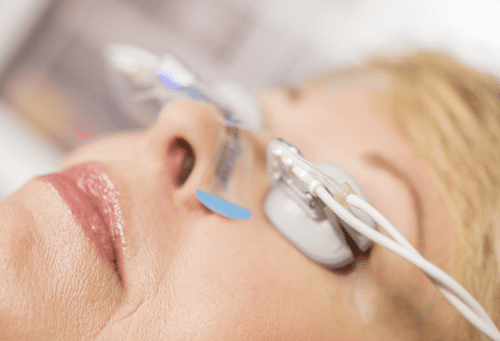
TearCare is an advanced dry eye treatment that uses localized heat therapy to dissolve meibum blockages and restore healthy gland function. Flexible SmartLid thermal pads are applied to the outer eyelids and deliver targeted heat for 15 minutes. The treatment is blink-assisted so patients are encouraged to blink normally during treatment. Doctors then manually express any remaining blockages, which may feel like firm pressure but is generally well tolerated.
TearCare is FDA-cleared for dry eye treatment with manual gland expression. Numbing drops aren’t required, and the open eye design works well for patients whose eye anatomy doesn’t fit dome-style applicators. Manual gland expression allows doctors to treat stubborn blockages individually, which is one of the main advantages of TearCare treatment. TearCare is highly effective; we have successfully used it to help thousands of patients with meibomian gland dysfunction and evaporative dry eye.
What is LipiFlow and How Does it Work?
LipiFlow® is an automated treatment that also uses heat to clear meibomian gland blockages and consists of a disposable activator and external eye cup that applies soft pressure. The LipiFlow® system heats the inner eyelid, while the device sends gentle pulses that dissolve and dislodge any blockages. The combination of heat and pulses is called a Vectored Thermal Pulse (VTP), which gently and effectively liquefies the meibum buildup that causes dry eye.
Numbing eye drops are applied before the procedure to maintain patient comfort. Because the heat and thermal pulsation happen simultaneously, there’s no separate manual expression. Some patients require multiple treatments depending on the severity of their blockages. LipiFlow was the first FDA-approved thermal pulsation system, and it has the longest research track record. A clinical study (by Jack V Greiner) has reported sustained symptom improvement for up to three years in selected patients following LipiFlow treatment.
TearCare vs LipiFlow: 7 Key Differences
Both treatments clear blocked meibomian glands with heat, but the differences come down to how the heat is delivered, how the glands are expressed, and what the experience feels like. The OLYMPIA randomized trial found that both treatments improved symptoms, with a subgroup of patients with more severe disease experiencing greater symptom reduction with TearCare. This treatment comparison reviews the differences between each treatment to help you make an informed decision.
Some patients benefit most from combining thermal treatment with IPL, lid hygiene, or prescription therapy rather than relying on a single procedure.
1. How the Heat is Delivered
TearCare uses flexible SmartLids eye pieces that adhere to the outer eyelids. LipiFlow uses dome-shaped activators that warm the inner eyelid directly, closest to the gland openings. Inner vs outer heating matters because it changes how the heat travels to reach the glands. TearCare conforming eye pads deliver heat across the outer lid, then rely on manual expression to finish clearing the blockage. LipiFlow, however, does both at the same time.
2. Eyes Open vs Eyes Closed
With TearCare, you keep your eyes open and blink naturally for the entire 15-minute treatment, so many patients find it more comfortable. LipiFlow treatments require patients to keep their eyes closed for the full 12 minutes. Some find that having their eyes closed is restful, while others may feel anxious. When it comes to comfort alone, the choice between the two treatments depends on what the patient prefers.
3. How the Glands Are Expressed
LipiFlow combines heat and pulsed pressure in one step called vectored thermal pulsation, so the glands are automatically cleared as the clogged meibum warms. TearCare separates heating from expression, with the doctor manually expressing each gland after heating, which allows for more precision in removing stubborn blockages. Patients with severe MGD may benefit from longer heating periods and hands-on professional gland expression.
4. Numbing Drops and Comfort
LipiFlow requires numbing eye drops before treatment, while TearCare does not. Both treatments create a gentle warmth against the eyelids. LipiFlow adds a light pressure that massages the lids. The manual expression step may feel like firm pressure but is generally well tolerated. If you feel pain, tell your doctor immediately. Neither treatment is considered painful or particularly uncomfortable. Many patients describe the heating process as surprisingly pleasant.
5. Fit for Your Eye Anatomy
Your eye anatomy can be the deciding factor for thermal treatments, regardless of which you would prefer. The LipiFlow dome applicator may not fit comfortably for patients with deep-set eyes. TearCare’s flexible pads conform to almost all patients, even with deep-set eyes. Your eye care practitioner will confirm the fit during the evaluation to determine which treatment is best for you.
6. What the Evidence Shows
According to numerous studies, TearCare and LipiFlow are closely matched in effectiveness. The OLYMPIA study found that both treatments provide similar results after a single session. The subgroup analysis found greater symptom relief with TearCare for patients with more advanced MGD. LipiFlow, however, has shown the longest track record of symptom relief for up to three years after one session.
7. What Else Can Each Treat
TearCare treatments can also address blepharitis, which is a chronic inflammation of the eyelids. LipiFlow doesn’t specifically target any other conditions. TearCare is typically more appealing for patients who have severe eyelid inflammation. Neither treatment addresses aqueous-deficient dry eye that is caused by too few tears. Different types of dry eye can require different medical approaches.
Which Treatment is Right for You?
The right choice comes down to comfort preferences and anatomy. Patients who don’t want to keep their eyes closed prefer to avoid numbing drops, have deep-set eyes, or are dealing with blepharitis can benefit from TearCare treatments. Patients who prefer a fully automated session with no manual gland expression often choose LipiFlow if they have compatible anatomy. Neither option is inherently superior to the other.
Candidacy is determined during a dedicated dry eye evaluation that includes gland imaging called meibography and tear film testing. Some patients aren’t eligible for either treatment due to contraindications like recent eye surgery, active infections, and certain implanted electronic medical devices (such as some pacemakers). We also offer OptiLight Intense Pulsed Light (IPL) treatment for those who aren’t candidates for TearCare or LipiFlow.
Do the Results Last? What the Research Says
Both LipiFlow and TearCare can provide long-term results, but maintenance sessions are vital for patients with chronic MGD. Home lid hygiene can extend results, so make sure you adhere to your doctor’s aftercare instructions. The underlying cause of your MGD will also affect how long the symptom relief lasts, which makes ongoing monitoring essential. While it’s difficult to determine exactly how long results will last, some clinical studies have identified a reduction in dry eye discomfort that can last for roughly 6 to 12 months.
Advanced Dry Eye Care at Weston Contact Lens Institute
At Weston Contact Lens Institute, our dry eye specialists create individualized treatments for each patient, weighing their gland health, symptoms, lifestyle, and treatment goals. We take time to evaluate your condition and explain your symptoms. Meibomian gland dysfunction and dry eye disease treatments are available at our Weston and Miami locations for your convenience. Contact our team through our convenient online booking system to request a consultation.